Friday, October 1, 2010

More about Zacatecas part III: Chalchihuites


Pressing further into the middle of nowhere, we went looking for some of the northernmost ruins of ancient Mesoamerica. This took a lot longer than we thought driving on a windy, heavily potholed rural highway. Eventually, we came to the town for which the ruins are named, Chalchihuites (Chall-chee-weet-ayes). A plaque in the town square says that the settlement was founded by conquistadors and their Tlaxcalan allies in the 16th century. (I'm guessing the Tlaxcalans got naming rights on this one).

The town Chalchihuites had the laid back atmosphere we had hoped to find in Sombrerete. It was actually a very friendly and relaxing place to eat gorditas and stroll around, but at this point most of the day was already behind us and so we couldn't spend long.

So finally we made it to the ruins. They're not as visually striking as the famous sites, as this was the outer edge of civilization. They are mysterious and interesting in their own right, though. The city is thought to have been a satellite of Teotihuacan, the dominant power of the time. All ancient Mesoamericans were sky-mad, and the location of the Chalchihuites ruins is all about the positions of the sun. First, it is located along the tropic of cancer. Second, from this exact spot, on both solstices and equinoxes, the sun rises directly out of a sharp mountain peak in the distance. There are a number of walls constructed at strange angles (not photographed) to create shadows along exact angles upon these days.

I like imagining the high priests of the sun cult at the top of their pyramid in central Mexico consulting arcane codexes to determine the precise location of this new colony at the very edge of the known world. Today, not too many political decisions are based on solar astronomy, but in ancient Mesoamerica it was no joke. Those privy to the carefully guarded secret of writing recorded cycles of natural phenomena over centuries, and their claim to connection with divinity was based on their ability to predict rainfall, eclipses, when to plant, and when to harvest. Their understanding of natural events had far more basis in fact than the ideas of some of our current religious leaders.

The settlement would also have been a frontier outpost, perhaps to check the barbarous nomadic chichimecas and to exchange goods such as obsidian and exotic bird feathers from the south with turquoise from the north.

A kindly old caretaker showed us around the ruins. He wore a cowboy hat and spoke in a sad, soft voice reminiscent of Juan Rulfo. He probably didn't have much formal education, but he was very knowledgeable about the site and took obvious pride in his work.

The first photo shows a group of columns, which I think the caretaker said also had some kind of calendar function. I'm not certain though, as I didn't always understand him 100%. In the next photo, showing the ruined walls of a small room, there is a stone square set on the floor. This was an oven for burning human hearts (!) On the right is a line of seat-shaped blocks, which are a representation of Quetzalcoatl, the feathered serpent god. The third photo shows the pointed peak in the distance, from which the sun still rises on solstices and equinoxes.


More about Zacatecas part II: Sierra de los órganos


After all the patriotic hoo-hah, Jenny and I (with two other friends) made a foray into northern Zacatecas state to see the spaghetti western/desert part of Mexico. There is a cool national park there called sierra de los órganos, which is littered with rock formations. I took all of the above photos, except for the one with the dinosaur, which is from "Caveman" with Ringo Starr. They've filmed a number of movies here, but this is the only one of them that I've seen. (I watched it as a kid on a double bill with "Quest for Fire" and thought it was hilarious, which I now blame on our not having a TV when I was a kid. Television and movies almost always seemed really, really good).

The park is outside the large town/small city of Sombrerete, which makes a rather half-assed attempt to bill itself as a tourist destination. It has very nice architecture for a dusty redneck town, but it didn't feel terribly friendly and there wasn't much to do. The main thing I remember is sitting in a cavernous restaurant trying to pick all of the gross processed ham out of our quesadillas when the waiters weren't looking. Oh, and that one of the restaurant's bathrooms featured two side by side toilets. This is so typical of Mexico--your toilet doesn't have a seat (needless extravagance; a waste of money!), but no expense is spared in installing a second toilet inches away from the first one in case you should want to hold hands with the person you're taking a crap next to.

The national park was really awesome though. It is a peaceful, isolated, and beautiful place. Despite it being a holiday weekend, we were the only ones staying in the tattoine-like cabins. We hiked a couple short trails (under an hour) that were about right for the time we were staying there. For more ambitious treks, you would want to hire a guide.

And finally, in case someone has stumbled upon this while trying to plan an excursion to Sierra de los órganos, here are a few things we found out by virtue of having done it: 1) It would be hard to do this trip without a car. 2) The cabins have gas stoves and refrigerators, but no utensils, dishes, etc., although we talked the ranger out of one small cooking pot. 3) You can buy firewood from the ranger and have a campfire. 4) Driving from Sombrerete, there is a little town whose name I can't remember, but you have to go through it. This pueblito has at least one grocery store by the side of the road which seemed to have as much variety as anything we found while driving around in circles through Sombrerete.

Monday, September 20, 2010

More about Zacatecas part I: Temporada de tunas


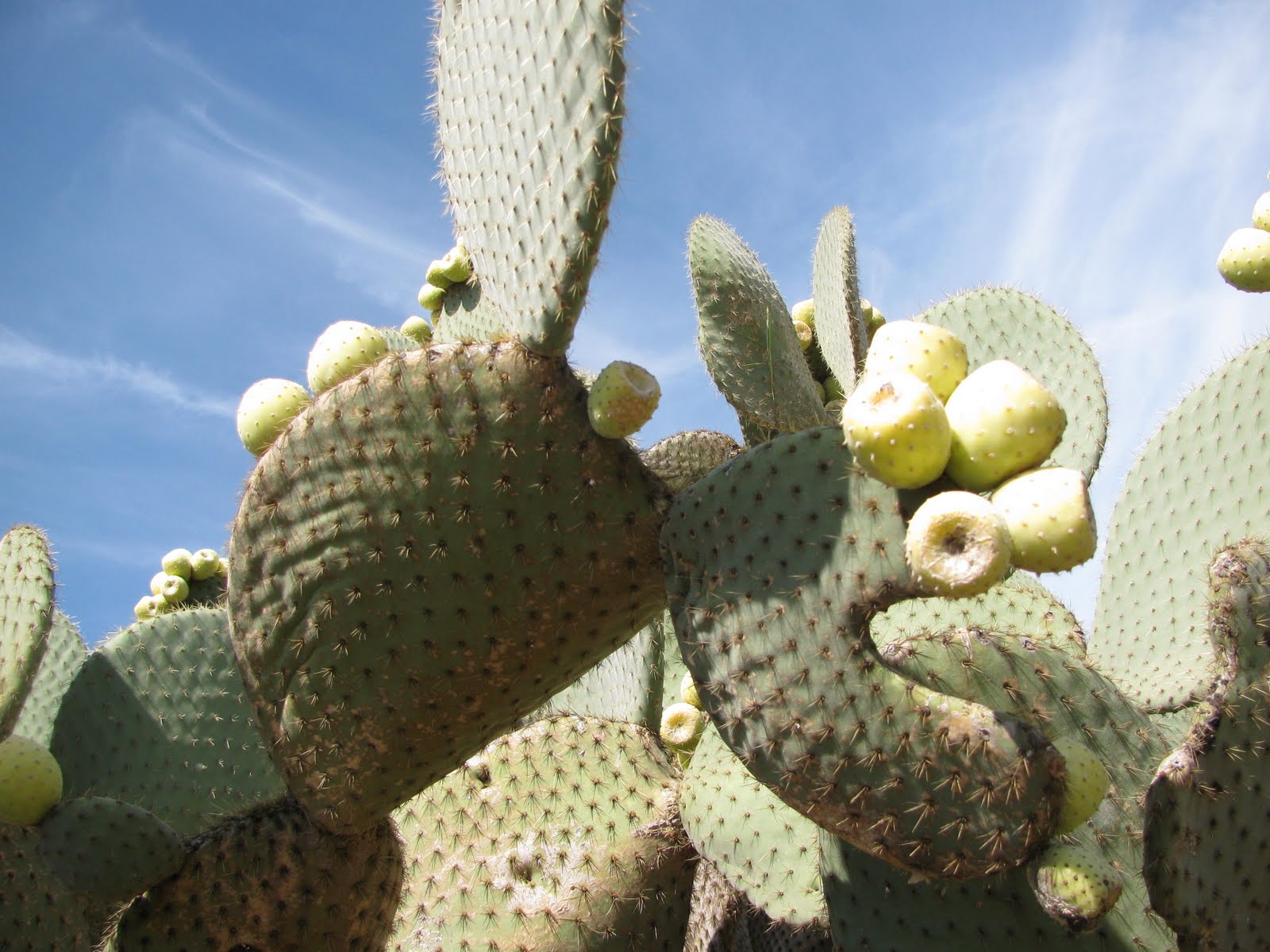
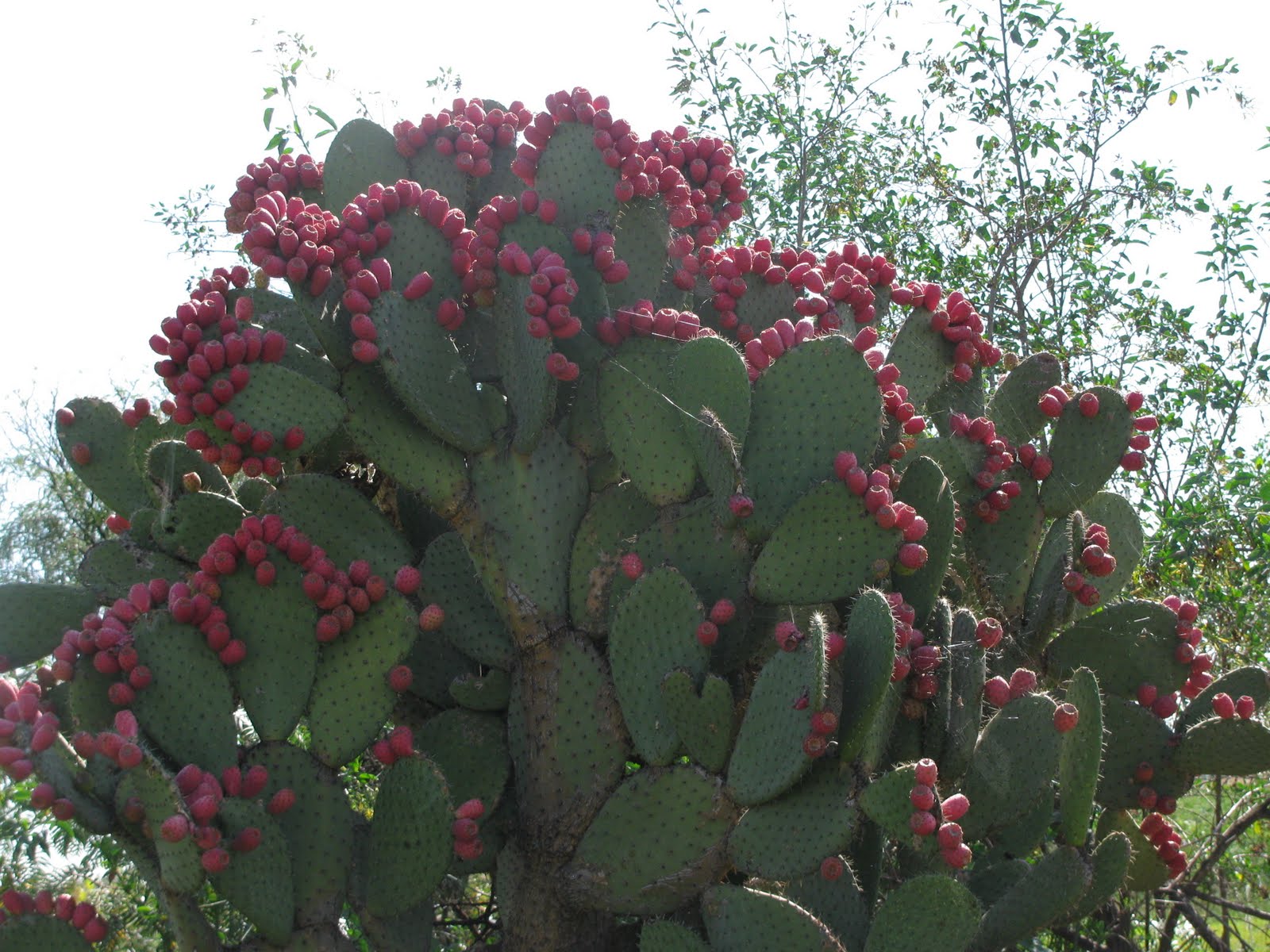
In Mexico tunas are prickly pear fruit (the fish is atún). A lot of norteamericanos find them too seedy, but for whatever reason this doesn't bother me. On our drive through rural Zacatecas, we saw zillions of them.

Sunday, September 19, 2010

¡Viva México! ¡Vivan bigotes!

Unlike in the USA, in Mexico wearing a fake moustache can be considered a patriotic act. It's doubly nationalistic (or would be if I were Mexican) because I donned a Pancho Villa 'stash in Zacatecas, which he sacked (against orders) in 1914. We were here to witness the bicentennial grito on September 16th. Given the Mexican propensity for long rambling speeches, we were pleasantly surprised to hear just 5 or 6 vivas before the fireworks started. More to follow about Zacatecas when I have time to write about it. The black and white photo shows Villa (left) and Zapata (right) discussing their large, full bigotes.

Saturday, August 28, 2010

Journey to the dark tower


Well, I am back in Mexico after a spell in the USA. I've started a new job which unfortunately means registering a change in immigration status with the Mexican government. This is not a simple process. So far I have been to the Palacio Federal five times (traveling an hour and back each time to get there). This palacio is more of an unadorned concrete rectangle than say the Taj Mahal or Versailles, but that's how Guadalajara rolls. My trips there have resulted in two scenarios: waiting in line so long I just have to leave or else being given false information that will be used against me the next time I go back.

So yesterday, amid a number of other early morning emergencies, I rushed to get there before 9:00 am. (If you get there after they open, even by 5 or 10 minutes you are absolutely screwed--you probably won't talk to anyone before they close again at noon). But luckily I managed to get into the queue outside the locked doors at 8:45. There were some lost American senior citizens who had found their way from the retiree paradise of Lake Chapala to the big, bad city. Having experienced their confusion on similar visits, I told them what line to stand in, what floor the bathrooms were on, and so on. Boy was that a mistake. Unfortunately the line they needed to stand in was also mine, so I was now subject to their annoying banter for as long as it took to wait there.

"English teacher, huh? You teach Ebonics? You don't teach them to talk like blacks do you?"

"Umm, no."

"Well, good. They think they can talk that way and then they complain they can't get a job! Because they'd rather just chill in their crib. And another thing..."

It was a two hour wait. So I've pretty much sworn off the bond of common fellowship with my countrymen who come to Mexico to live out their golden years. If they come down here to die, from now on I say, let 'em die. Darwin and all that.

Finally my number was called, and I expected to at last pick up my new work visa. The guy looked over my papers, had me sign some other papers, and went into the back office. However, instead of a work visa, he returned with an official letter demanding that I pay $2,400 (pesos) within 10 days or else be deported! This is an unwelcome sum to pay on a Mexican salary. But the agonizing part is that it means going back across the hall to wait in line to get a payment form, leaving to pay at a bank, then bringing the bank receipt back to the Palacio Federal to wait in line to prove I've paid it, then waiting at his window with the notification that proof of payment was accepted.

I tried to argue with him that two separate immigration officials had independently assured me that this fee was no longer being charged. (Both the lady that had given me the wrong forms to fill out and the lady who refused to admit that she lost my passport told me of this). He shrugged, took a bite of his candy bar, and gave a bored explanation of how, due to 'mala suerte' I had come in after the new law was passed, but before it actually took effect, causing them to re-evaluate my application.

A new coworker of mine mentioned getting through immigration by pulling the ugly American--demanding to talk to a supervisor, yelling, etc. after which the problem was cleared up within a matter of minutes. But the thing is, I'm pretty sure he's also a native Spanish speaker. For me as second language learner, high-stress situations are very hard to communicate in. I could maybe achieve a primal scream as I gouged the bureaucrat's eye out with a pen, but that would be about it. I can barely express myself in English when I'm this angry. After I left I was able to compose a quite flowery and savage denunciation of the INM in Spanish as I walked down the street, and I'm sure this greatly impressed other pedestrians.

Monday, July 5, 2010

my random day

Today I've been rushing around trying to get things done before heading back to the U.S. for a month or so. This is almost never productive in Mexico. It certainly wasn't today. At the end of it all I found myself on a packed 633 bus during the hottest part of the day, cursing under my breath at all things Mexican. (In my mind the incompetent secretaries at the University of Guadalajara, the guy who was supposed to show up at 9:30 to connect our washing machine, the people I was packed up against, and the bank were somehow all working in concert against me). As is normal, the driver accelerated madly forward at every green light, never anticipating having to stop again. Each red light caught him totally off guard, and he would suddenly slam on the brakes each time. This lurching is pretty standard fare on city buses. Sometimes I close my eyes and picture myself on the bridge of the Enterprise when they get hit by photon torpedos, but today I was far too pissed off. The bus was so miserable that I decided to get off a stop early and walk. But the driver, who seemed to be in some kind of race with the the other buses, only saw fit to let off one passenger before slamming on the gas pedal again. I was still holding a metal bar but I hadn't really steadied myself, so my arm was almost jerked out of its socket when he accelerated. Ignoring the steady ringing of the buzzer and people shouting "¡Baja, baja!" the driver proceeded to speed past bus stop after bus stop. He seemed intent on getting to the front of a convoy of other buses, but they kept outmaneuvering him, so he was stuck in the outside lane. When he finally relented and pulled in behind the others at a bus stop, I had the option of backtracking a long ways or getting lost by trying to find a shortcut through a windy residential area. I chose the getting lost while trying to find a shortcut option.

Eventually I ended up somewhere I knew, a bus stop on the edge of a vacant lot overlooking some dumpsters at the mall. I waited there for a long, long time with a tattooed guy wearing a wife beater and a homemade sling for his broken arm. He was something of an expert on bus routes and would give advice to other would-be bus riders who wandered past. (Even Mexicans are fairly baffled by the bus system. Though perhaps system isn't the right word). After a really long time of standing silently next to each other we got on the same bus. Instead of paying, he whispered a word to the driver, positioned himself at the front, and began to deliver a long monologue. Despite the bus being nearly empty, he spoke with great self-importance, although very rapidly--I didn't understand a word. I assumed he was asking for money because of his broken arm. I fished around in my bag for a few pesos since I felt some camaraderie from our having waited so long together. But then, when I looked up again, he was driving a long metal nail up his left nostril. On a moving bus mind you. Then another nail up the right nostril, concluding his presentation. I felt bad that I only had 3 pesos left on me to give him.

Friday, July 2, 2010

Pronouncing English words in Spanish

Our internet provider, me-ga-CAH-bley (left)


One of the odd things about being an English speaker in Mexico is trying to figure out how to pronounce English words. For example, when we first bought coffee and asked for it to be ground we had to repeat the words "auto drip, AUTO drip, au-to DRIP!" over and over while pointing desperately at the at the machine. Finally the woman figured out we wanted "oww-toe-dreep."

Some words change and others do not. Muffin is moofeen, but pub is pronounced exactly the same as in English. Whenever I encounter a new appropriated word, I have no idea whether to try to fake a Spanish Mexican accent as I say it. Places like McDonald's and Burger King are minefields of linguistic bafflement. When I discovered cherry tomatoes at a tianguis (outdoor market) I tried to ask for "jitomates de cereza" which completely confused them. Which did I want tomatoes or cherries? I should have asked for jitomates "cheri." My favorite appropriation to date is colgate which is pronounced coal-GAH-tey. It really sounds like it might be derived from the indigenous nahuatl, especially when a street vendor calls out the word multiple times in rapid succession.

Here are some other ones off the top of my head. Cheetos are CHEY-toes, waffles are WA-fleys, hot cakes are OTE-cakes, hot dogs are OTE-doh-gs, cream cheese is feel-a-DEL-fia (as in Philadelphia), Sprite is ESprite, 7-up is ESevenup, and chips are cheeps.